Recently, our team of rug cleaning specialists observed that many homeowners became curious about whether lingering pet odors are simply a surface concern. When our team responds to the queries explaining how pet accidents affect rug fibers and indoor air quality, homeowners are surprised, as they hadn’t considered the deeper consequences for household durability and family health.
Our technicians share that most homeowners underestimate the effects of pet accidents on rugs. For instance, persistent pet odors are not just unpleasant smells, but potential triggers causing severe health issues.
Hence, to ensure homeowners don’t neglect pet accidents in rugs and their effects on indoor air quality, we decided to share some helpful insights. Keep reading to uncover specifics about pet accidents, how they affect rug fibers and indoor air quality, tips to manage rugs after pet accidents, and when expert help will be needed.
How Pet Accidents Affect Rug Fibers and Indoor Air Quality?
Homeowners often assume pet accidents are occasional instances, but rugs in active households face a steady cycle of contamination. Each type of pet accident carries unique risks, alters rug fibers, and impacts indoor air quality, requiring more than casual cleaning.

Let’s analyze the effects of pet accidents on rug fiber and indoor air quality:
1. Urine spots (Urination)
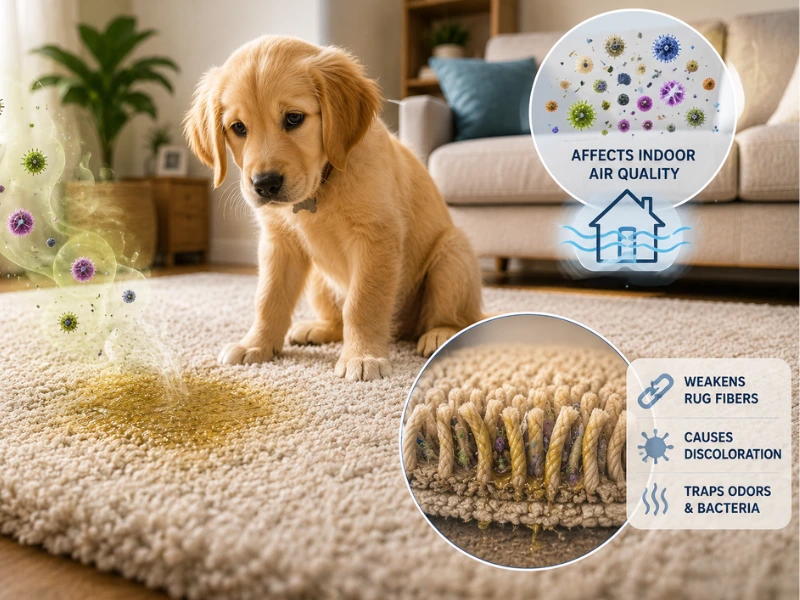
When a pet urinates or marks near the rugs, the urine components penetrate deep into the fabric layers. Fresh deposits are acidic, but as they dry, they become alkaline.
- Effect on rug fibers: Causes pet urine damage to rug fibers, including dye loss, brittleness, and permanent yellowing.
- Effect on indoor air quality: Fuels bacterial growth, which releases ammonia gases, worsening odors and respiratory irritation.
Key note: Incontinence in dogs can also lead to urination, and we believe that in such cases, your dog needs medical attention.
2. Feces Stains (Defecation)
Digestive issues, poor potty training, or illness can lead to fecal accidents. These deposits contain protein‑rich residues that hold stubbornly to rug surfaces.
- Effect on rug fibers: Bonds with fibers, weakens foundations, and creates stubborn stains.
- Effect on indoor air quality: Foul odors are released, which elevate bacterial contamination indoors.
3. Vomit incidents (Vomiting)
Dietary changes, illness, or stress can cause pets to vomit. Acidic stomach contents spill onto rugs, altering their dyes and textures.
- Effect on rug fibers: Etches dyes, leaves brittle patches, and causes visible discoloration.
- Effect on indoor air quality: Produces sour odors and can encourage mold growth if moisture lingers.
4. Pet Dander and Hair (Shedding)
Shedding is a natural process, and pets constantly release fur and skin flakes that embed deep into rug layers. Over time, this constant release builds in hidden rug foundations, especially in dense or high‑pile fibers.
- Effect on rug fibers: Dust and debris accumulate, degrading fiber quality over time.
- Effect on indoor air quality: Acts as a reservoir for allergens, worsening asthma and allergy symptoms.
5. Saliva and Drool (Drooling)
Chewing toys, licking, or resting leaves moisture and proteins on rugs. These residues often go unnoticed, yet each new saliva deposit compounds contamination, creating sticky patches that attract dust and bacteria.
- Effect on rug fibers: Attracts dust and bacteria, which form sticky patches and gradually degrade the fiber texture.
- Effect on indoor air quality: Creates localized odor pockets and supports microbial growth.
6. Mud and Debris (Outdoor Activity)
Pets track soil, pollen, and moisture indoors after outdoor play. The contamination is severe in rainy or humid seasons, when mud and organic matter stick to paws and spread across rugs.
- Effect on rug fibers: Soil particles grind into fibers, accelerating rug wear and staining.
- Effect on indoor air quality: Introduces pollen, spores, and outdoor allergens into the home environment, triggering allergies.
Tips to Contain Damage From Pet Accidents
When it comes to controlling the effects of pet accidents on rugs, the key is to act fast. Quick homeowner actions minimize fiber damage and maintain indoor air quality. Below are some quick actions that you need to take once you encounter any pet accident on your rug:
- Blot quickly
Use paper towels or a cloth to blot (never rub) fresh urine, vomit, or drool. This prevents pollutants from penetrating rug padding and fibers, minimizing the scope of permanent staining and odor buildup.
- Apply enzyme cleaners
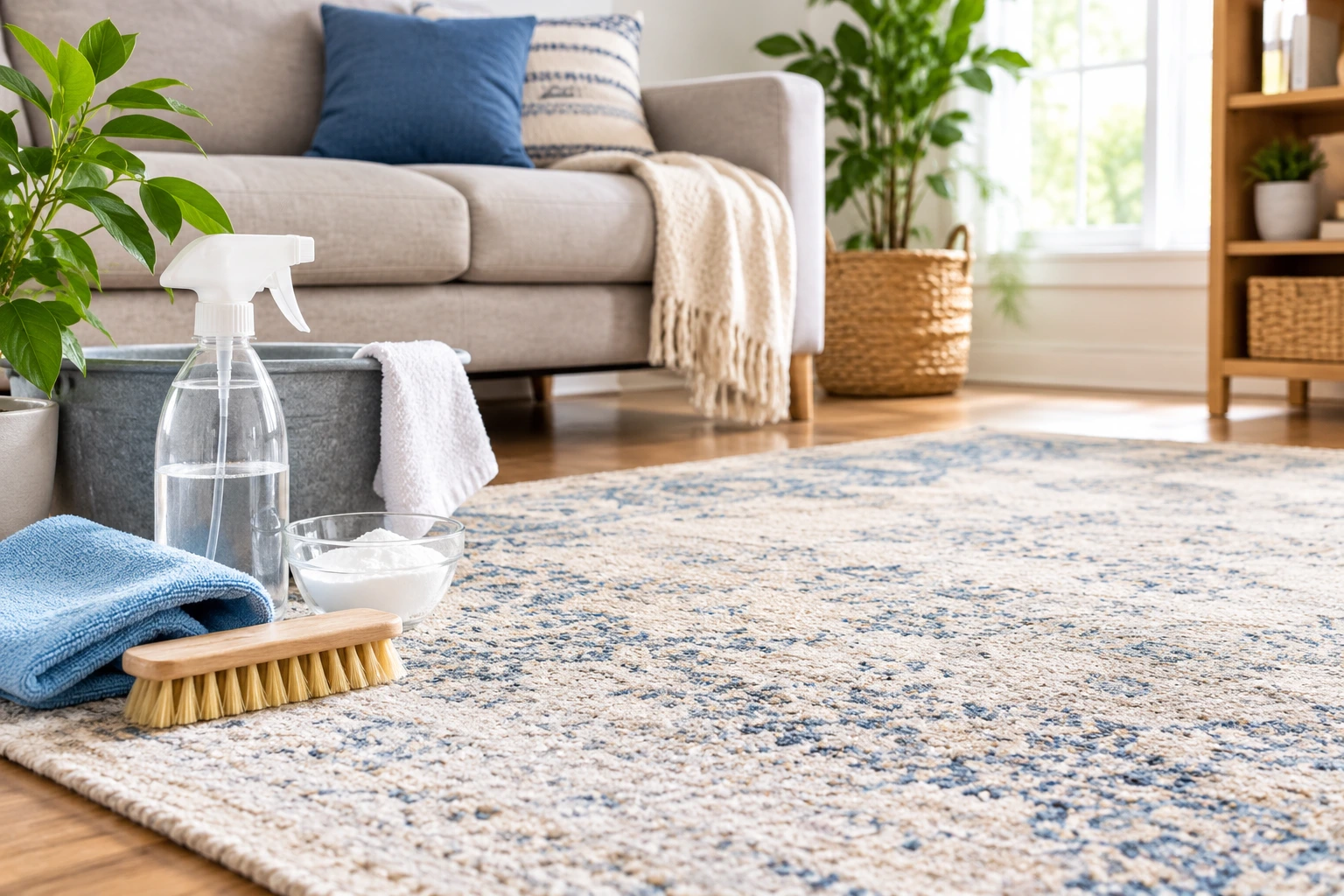
Enzyme solutions break down proteins and uric acid crystals, facilitating effective pet stain removal from rugs and outperforming standard sprays by neutralizing odor at the source.
Pro tip: If you want, you can also use natural options such as vinegar and baking soda for mild accidents, though they are less effective on deep contamination.
- Eliminate persistent odors
Use baking soda or rug‑safe odor neutralizers to absorb lingering smells before bacteria spreads and worsens the atmosphere. Doing this prevents foul odors from settling into rug fibers and supports thorough area rug odor removal.
- Control Humidity
Maintaining indoor humidity is crucial because excess moisture accelerates bacterial growth and mold activity. Use dehumidifiers, air conditioners, or exhaust fans to keep humidity be low, preventing moisture from amplifying pet odor and indoor air quality issues.
- Vacuuming
Regular vacuuming with quality filters removes allergens from pet accidents such as dander and hair. This helps control issues like asthma and respiratory irritation. Our team says you can vacuum for faster drying by lifting residual moisture from rug surfaces, reducing the risk of mold and odor reactivation.
- Spot Sanitization
Use rug‑safe sanitizing sprays on areas where pets frequently rest or play. This keeps bacteria from multiplying between cleanings and helps maintain freshness until you schedule professional rug cleaning services.
Preventive Measures to Reduce Pet Accidents
Our technicians believe that to complement your own efforts, you need to manage your pets’ behavior, activity, food and water intake, and much more. Here’s what you need to do:
- Set Proper Habits
Consistent training establishes clear bathroom habits for pets. This matters because it reduces confusion and stress, lowering the chance of indoor accidents. The outcome is less pet urine contamination in rugs and a healthier home environment. - Control Food and Water Intake
Scheduled feeding and water management create predictable bathroom patterns. By planning mealtimes, you can anticipate needs and prevent late‑night surprises. Doing this reduces the risk of nighttime rug staining and makes accident prevention easier. - Regular Grooming
Regular grooming removes excess fur, trims nails, and maintains pet cleanliness. It is recommended because it minimizes shedding, saliva transfer, and dander buildup. The outcome is cleaner rugs with fewer allergens from pet accidents and an extended lifespan. - Activity Management
Wiping paws after outdoor play removes mud, pollen, and debris before pets re‑enter the home. This step protects rugs from abrasive soil and allergens. The outcome is reduced soil and allergen buildup and improved rug durability. - Assign Dedicated Area
Keep designated zones with mats or washable rugs for pets to rest or play. Our technicians recommend this as it limits exposure of fine rugs to frequent accidents. As a result, cleanup becomes simpler, and no pet odor and indoor air quality issues.
Signs You Need Professional Intervention
Even with preventive care and quick action, some situations go beyond what DIY methods can handle. At this stage, calling in professional rug cleaning services is the best course of action to ensure that rugs are restored safely and indoor air quality is protected.

Here are some signs indicating the need for expert help:
- Persistent odors: Smells linger even after blotting and applying enzyme cleaners. Acid crystals or bacteria are embedded deep in rug layers.
- Recurring stains: Stains keep reappearing even after drying, suggesting deep contamination in the rug foundation or padding.
- Fiber brittleness: Vacuuming and spot sanitization cannot reverse fibers that feel rough, brittle, or discolored, which signals long‑term damage from urine or vomit.
- Allergy flare‑ups: Even with constant vacuuming, sneezing, coughing, or asthma symptoms persist, suggesting allergens and bacteria have multiplied and are circulating indoors.
Let Professionals Clean Up Your Messy Rug and Maintain Indoor Quality
Understanding how pet accidents affect rug fibers and indoor air quality is helpful. But you also need to be proactive in managing pet habits and household routines to minimize the scope of pet accidents near rugs. It’s also important to stay alert when situations escalate: recurring stains, lingering smells, or set‑in urine and feces from multiple occurrences. Call in professionals to clean rugs.
At Vancouver Rug Cleaning, we have a team with more than 25 years of experience in pet odor removal from rugs that encounter high pet activity. They use effective pet-friendly methods and restore the original vibrant condition, completely free of pet odors. The process gently breaks down deep-seated stains and odors, restoring your rugs without damage while maintaining proper indoor quality.
Give us a call immediately if your pet has made a massive mess on your rug.
FAQs
Q. Can pet urine smell in rugs cause respiratory problems?
Yes, lingering pet urine smells in rugs can irritate the respiratory system and cause breathing problems. The ammonia released as urine decomposes, along with bacteria and mold growth, may trigger coughing, asthma flare‑ups, or other breathing problems, especially in children, the elderly, or those with pre‑existing conditions.
Q. How often should rugs be cleaned if pets are indoors?
Pet behavior drives frequency. Homes with well‑trained pets can schedule professional cleaning every 12 to 18 months (CRI recommended timeframe for rugs), while multiple pets or frequent accidents shorten that cycle to 6 to 12 months.
Q. How do I protect my area rug from pet urine?
Place washable mats or runners in pet zones, use rug pads beneath area rugs to block seepage into flooring, and apply fiber sealants. This reduces absorption, helps clean quickly, and prevents long‑term odor or fiber damage.
Q. What rug material should I avoid if I have multiple pets?
Delicate fibers such as silk, viscose, and unsealed wool absorb urine and feces quickly, making stains harder to remove. These rugs trap odors and weaken fibers under repeated cleaning, so in our professional opinion, durable synthetics or washable options are better for multi‑pet homes.