To remove grease from carpet and rugs, blot up excess oil with a clean cloth, cover the spot with an absorbent powder, and vacuum it away after it has had time to work. Treat any remaining residue with a rug-safe cleaning solution, remove leftover cleaner, and let the area dry completely.
A few drops of cooking oil, a fallen piece of buttery food, or greasy residue tracked in from outside can leave an unwanted mark on your favorite area rug. Unlike many ordinary spills, grease tends to cling to fibers and attract dust, making the affected spot look darker and dirtier over time.
Knowing how to remove grease stains from a rug can help you tackle fresh spills before they become more difficult to treat. The key is to absorb as much oil as possible, choose a suitable cleaning method, and avoid damaging the rug while working on the stain.
How To Remove Grease Stains From A Rug In 6 Simple Steps
Grease stains can settle into rug fibers quickly, so the way you handle the first few minutes matters. Rather than reaching for a strong cleaner straight away, start with a few careful steps given below that lift the oil without spreading it further.

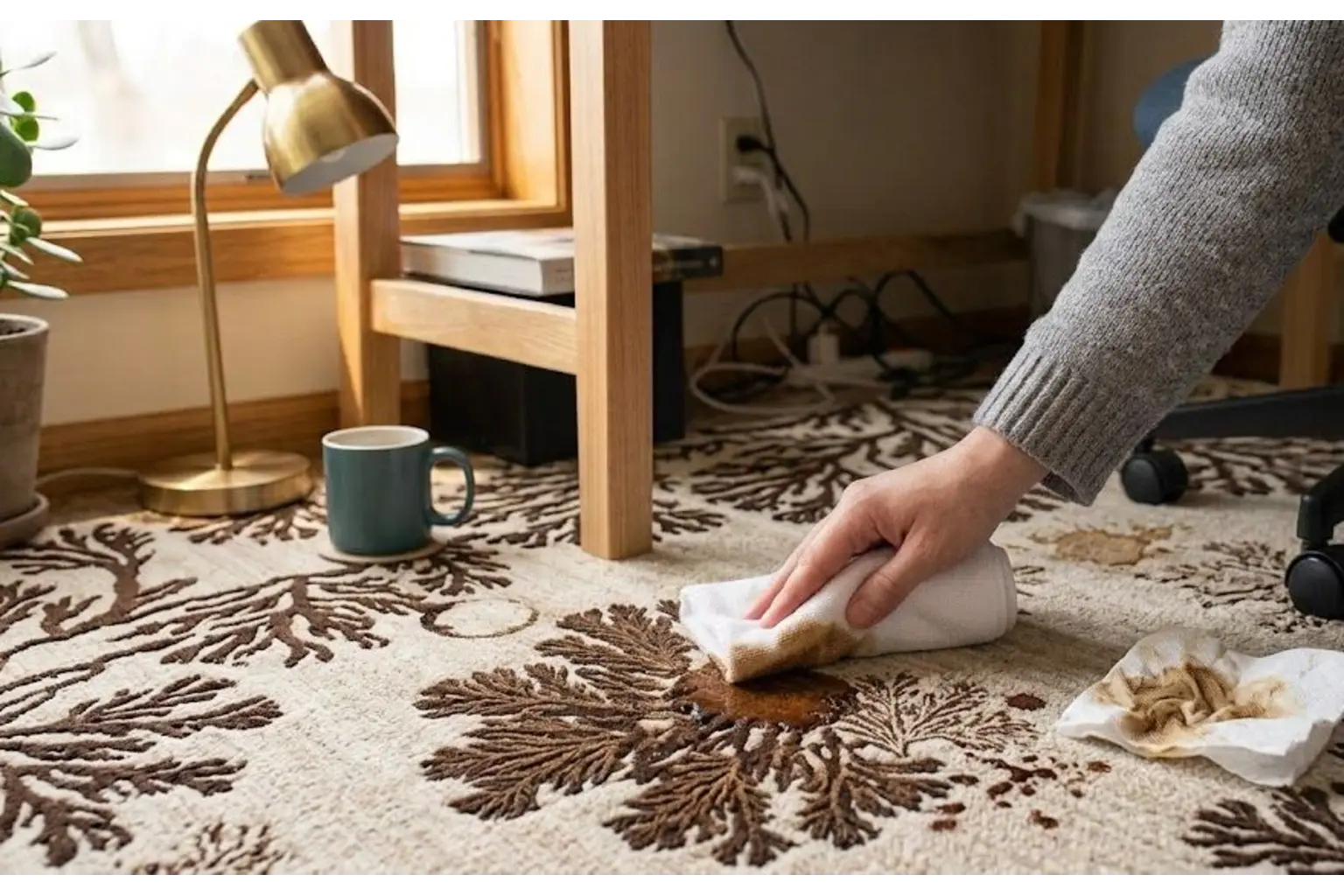
Step 1: Blot Away Excess Grease
Place a paper towel or clean white cloth over the stain and press gently to absorb the surface oil. Move to a clean section of the cloth as it picks up grease. Do not scrub back and forth, as this can spread the oily residue into nearby fibers.
Step 2: Apply an Absorbent Powder
Sprinkle cornstarch over the stain to absorb remaining surface grease. Leave it in place for around 15 to 30 minutes, or longer if the product instructions recommend it. For delicate or valuable rugs, check the care guidance before using any powder.
Step 3: Vacuum the Powder
Vacuum the treated area gently using a setting suitable for the rug. Use a gentle vacuum setting and take care around fringes, raised loops, or fragile fibers to prevent pulling or damage. Once the powder is removed, check whether the rug stain has become lighter.
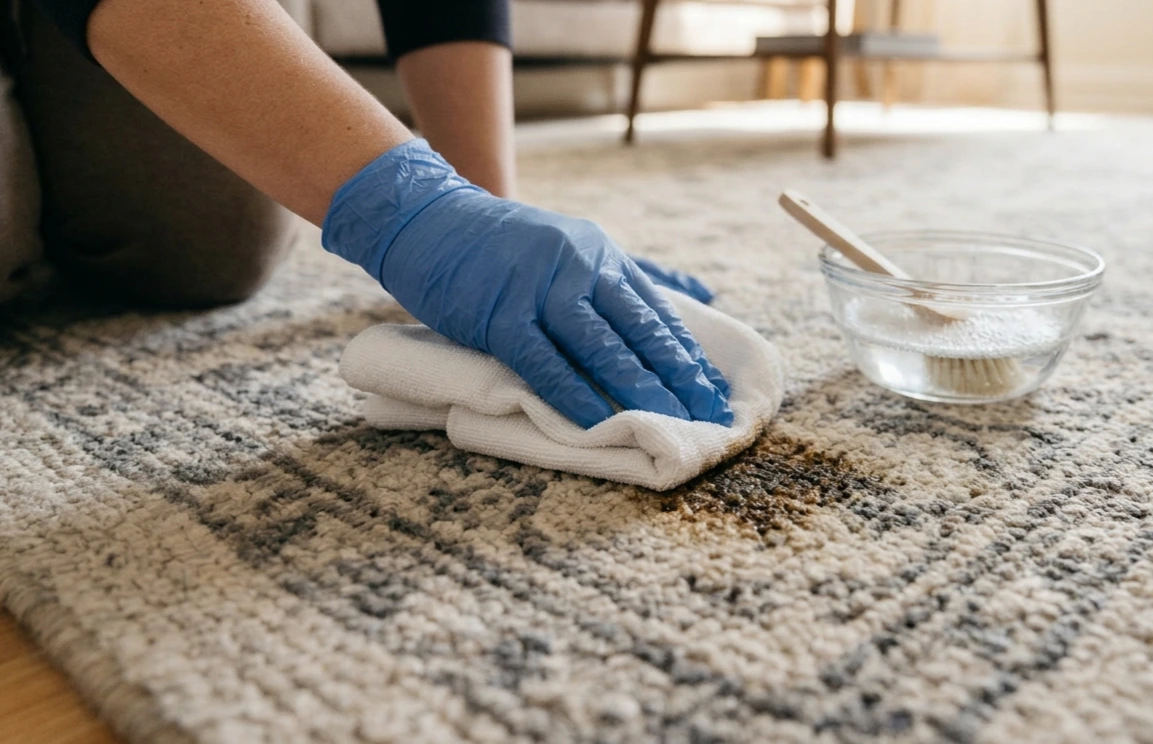
Step 4: Clean the Remaining Stain With a Mild Solution
If a greasy mark remains, use a small amount of a rug-safe cleaning solution on a clean cloth. Blot from the outside edge toward the center to keep the stain from spreading. A mild dishwashing solution may be suitable for some washable synthetic rugs, but it should not be used indiscriminately on every rug material.
Step 5: Remove Cleaning Residue
Dampen a fresh cloth lightly with clean water and blot the area to lift away leftover cleaner. Use as little moisture as possible. Soap residue can attract dirt, leaving the spot looking dull or dirty again after the rug dries.
Step 6: Allow the Rug to Dry Completely
Gently pat the damp spot with a clean, dry towel to soak up any remaining moisture. Let the rug air-dry in a well-ventilated space, keeping foot traffic away until it is fully dry. Check the result afterward; if the stain persists, avoid repeatedly applying products that may harm the rug fibers.
How to Remove Different Types of Oil and Grease Stains From Area Rugs
Not all grease stains behave the same way. A splash of cooking oil can leave a different kind of residue than melted butter or motor oil, and each may require a slightly different approach. Identifying what caused the stain helps you choose a suitable cleaning method without putting your rug’s fibers at risk.
How to Get Cooking Oil Out of a Rug
Cooking oil from a pan, salad dressing, or a dropped snack can leave a slippery, dark patch. Start by blotting the oil, then use an absorbent powder before treating any remaining mark with a compatible cleaning solution. Work patiently rather than soaking the rug in an attempt to dissolve the oil.
How to Remove Food Grease Stains From Area Rugs
For butter, creamy sauces, or fried food, lift solid pieces with a spoon before blotting the oily residue. Lift the food residue gently so it doesn’t become trapped between the rug fibers. After clearing the area, use the recommended stain-removal method and make sure the cleaning product is suitable for your rug’s fabric.
How to Remove Old or Set-In Oil Stains
Older stains may have collected dust or penetrated beyond the visible surface. A careful round of powder treatment and spot cleaning may improve their appearance, but repeated scrubbing can cause fiber damage or discoloration. If the oil has spread into the rug’s backing, professional treatment may be needed.
Common Mistakes to Avoid When Cleaning Greasy Rug Stains
A grease stain can go from manageable to stubborn with just one wrong move. Avoiding these common cleaning mistakes can make stain removal easier and keep your rug in good condition.
Scrubbing aggressively:
Friction may spread grease and damage the pile.
Using too much water:
Excess moisture can affect the backing and make drying difficult.
Applying heat:
Heat may make some oily stains harder to treat.
Mixing cleaning products:
Combining chemicals can create harmful reactions or damage rug fibers.
Skipping a patch test:
Even a mild product may affect dyes or finishes.
Leaving soap behind:
Residue can attract fresh dirt and leave a visible mark.
Restore Your Rug’s Appearance With Professional Care
Knowing how to remove grease stains from a rug can help you tackle spills before they settle deep into the fibers. Removing surface oil with a cloth and drawing out the residue with an absorbent powder can help, although deeply set grease marks may require specialized cleaning. Choosing the right treatment for your rug’s material is essential to avoid discoloration or fiber damage.
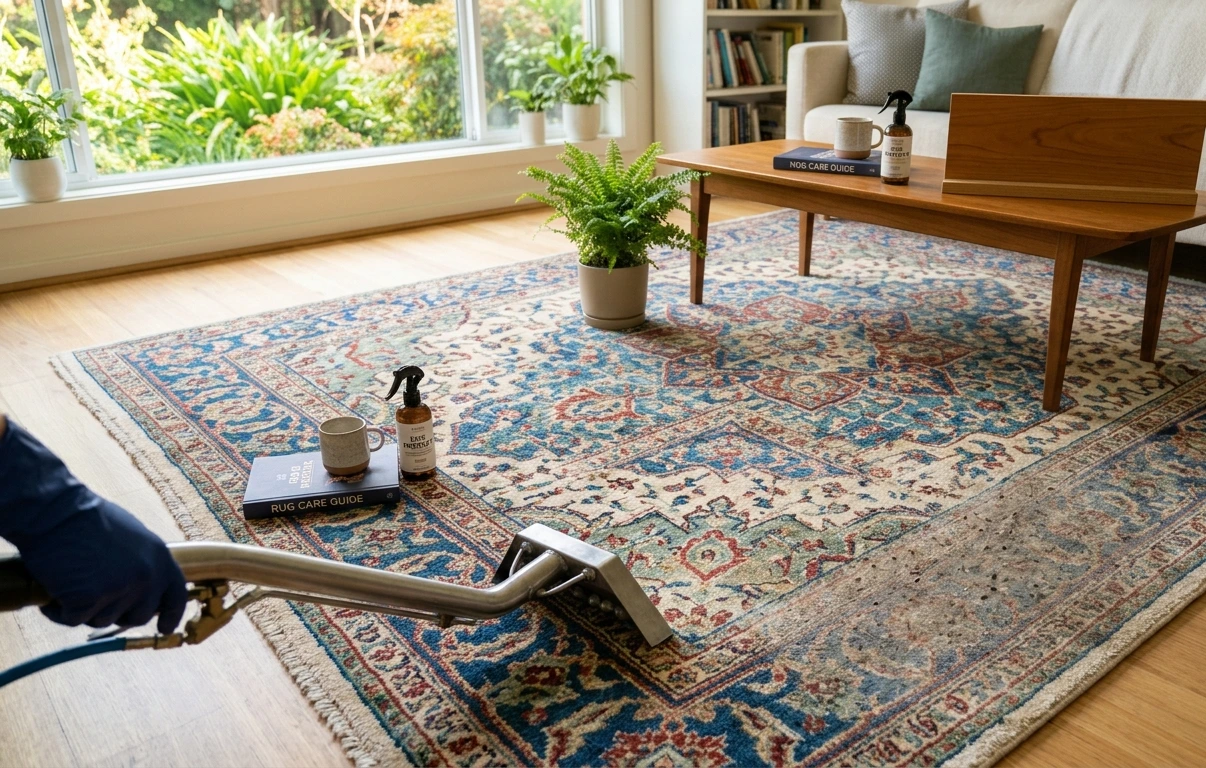
At Vancouver Rug Cleaning, we offer area rug cleaning, deep cleaning, targeted stain treatment, odor removal, and allergen treatment in Vancouver, WA. With specialized equipment and cleaning methods suited to different rug materials, our team helps homeowners address stubborn stains while caring for their rugs. Free pickup and delivery also make professional rug care more convenient.
Need help restoring a rug affected by grease or oil? To discuss your rug’s needs and arrange professional cleaning!
Contact Us
FAQs
1. Can old grease stains be removed?
Yes, old grease stains may be reduced or removed, depending on the type of grease, rug material, and how deeply the oil has penetrated. Stubborn stains may require professional cleaning to avoid damaging the fibers.
2. Will vinegar remove grease from carpet?
Vinegar may help with some residues, but it is not always effective against grease and oil. Check your carpet’s care instructions and test any cleaning solution on a hidden area before applying it to the stain.
3. How to remove oil stains from area rugs?
Blot the excess oil with a clean cloth, sprinkle cornstarch over the stain to absorb the residue, and vacuum it up after 15 to 30 minutes. If the mark remains, gently blot it with a rug-safe cleaning solution, remove any residue with a lightly damp cloth, and allow the rug to dry completely.
4. How to clean greasy stains from a rug?
Blot excess grease with a clean cloth, apply an absorbent powder such as cornstarch, and vacuum it away after allowing it time to work. Treat any remaining stain with a suitable rug-safe cleaner, remove residue, and let the area dry completely.
5. How to get engine oil out of carpet?
Blot up excess oil without rubbing, and avoid applying strong solvents or heat. Because engine oil can contain stubborn residues, professional cleaning may be the safest option for valuable rugs or deep stains.
6. What is the best grease stain remover?
The best option depends on the rug’s fiber, dye stability, and the type of grease. Choose a product labeled as suitable for the material and test it in a hidden area first.
7. When should you seek professional rug stain removal?
Seek professional help for oil stain removal from rugs when a stain persists, penetrates deeply, or affects a delicate, antique, or valuable rug. Professional assessment can reduce the risk of damage from unsuitable home treatments.